Chrissy Ricker
  • Home
  • Publications
    • Piano collections
    • Pop & rock arrangements
    • Video game arrangements
    • Vocal music
    • Instrumental music
  • Search
    • Search my catalog!
  • About
  • Blog
  • Free Stuff
  • Contact

A Fun Technique Game for Your Teaching Toolbox

11/16/2018

2 Comments

 
Picture
When working with beginning students, I have three initial technical goals:
  1. Creating a relaxed, round hand shape.
  2. Playing with the correct part of the finger without collapsing the joints.
  3. Playing with a non-legato touch, using the arm and maintaining a flexible wrist.

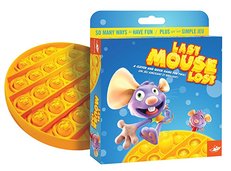
These goals can be challenging for small hands and fingers! However, I have found a great teaching tool that is working wonders with my students—the game “Last Mouse Lost.” I discovered this game at the recommendation of another teacher on Facebook last year, and I have been incorporating it into my lessons in different ways over the past year with great success.

Although this game has official rules, I use it a bit differently--as a teaching tool for helping students to see and hear that they are landing on the correct part of their finger and to practice dropping onto each key with a bit of arm weight and a flexible wrist. It is also a great way to review finger numbers with young students. Here is what I do:
​
  • Place the game on the closed piano lid.
  • Demonstrate for students how to “pop” each row of bubbles with one finger (use fingers only—no thumb). You will use a light, bouncing motion of the arm with a flexible wrist, floating up slightly after you pop each of the bubbles.
  • Call out a finger number and ask students to “pop” a row of bubbles. Make sure students are maintaining a round, relaxed hand. If you see tension developing, stop and have students gently shake the hand to release the tension. (Or, if you are goofy like me, you can sing the Taylor Swift song “Shake it Off”!)
  • If students land on a bubble correctly, it will press all the way in with a satisfying “pop.” If students land on the wrong part of the finger, or without enough arm weight, the bubble won’t pop all the way. This is a great visual and aural reminder for students that they are doing this exercise the right way.
  • Once the student has popped all the bubbles, flip the game over and repeat with the other hand.

After we play this game, I open the piano and have my students repeat the movement on the piano keys. They should be able to hear the difference this makes in the sound—they will get a nice, fat tone because they are playing each key using their arm weight and the correct part of their fingertip. We do this game at the start of the lesson to get students thinking about how their arms, hands, and fingers should feel as they play. You can also pull the game out and do a quick refresher if you see bad habits creeping in as students are playing their pieces.

I think the best thing about this game is that it turns a rather difficult technique that can be the cause of much frustration for young students into something fun. I have even used this game as a “gentle reminder” with a few of my older students—especially those that have chronically flat fingers.

I purchased “Last Mouse Lost” on Amazon HERE, but you should also be able to find it at your local toy store or in the toy section of your local big box store.

​What do you think? Any favorite teaching tools you like to use to work on technique with your students? I’d love to hear your suggestions for making technique practice fun!

2 Comments

Free Halloween Resource Round-Up!

9/25/2018

0 Comments

 
Picture
 
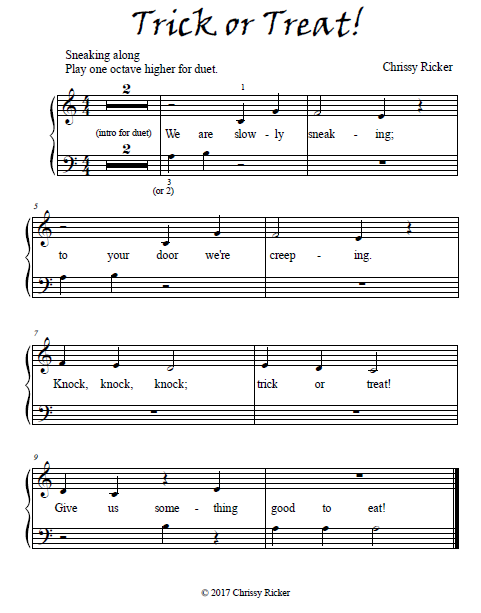
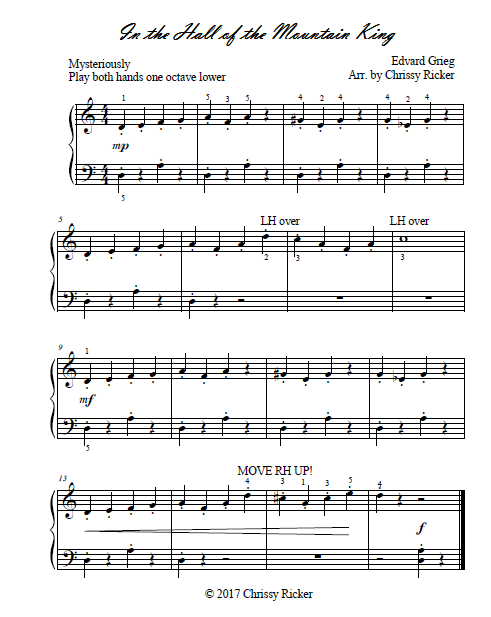
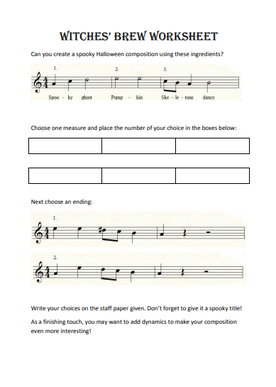
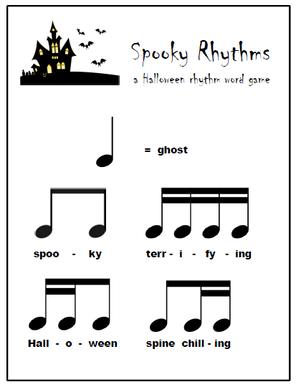
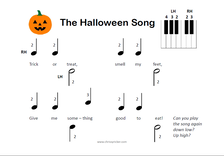
​Looking for a few Halloween activities to do with your students this October? Today I am sharing links to the Halloween resources available on my website! 

Click on the pictures below to download free music, a composition activity, and a rhythm game. Or, scroll down to find a link to search for all of the Halloween-appropriate solos and duets in my music catalog!


Picture
Free primer piece
Picture
Free early elementary piece with optional teacher duet
Picture
Free elementary piece
​ 
Picture
Free composition activity
Picture
Free rhythm activity

​
For more Halloween fun, click HERE to search my catalog! Select the level you are looking for, then select "Halloween" under "Search by genre." You will be able to listen to each piece, as well as click on a link to see and/or purchase the music.


Do you have any fun activities planned for your students for Halloween this year? Please leave a comment below--I'd love to hear from you!
0 Comments

Free Landmark Note Worksheets!

4/26/2018

20 Comments

 
Picture


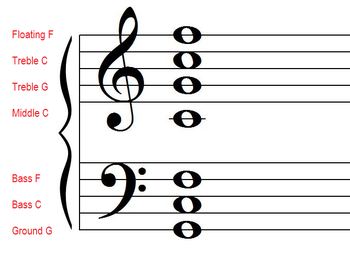
A great way to build strong note-reading skills is by teaching "landmark" notes: notes on the staff that are easy for students to memorize and identify quickly.

The landmark notes that I have found to be the most helpful for my students are shown in the picture on the left.


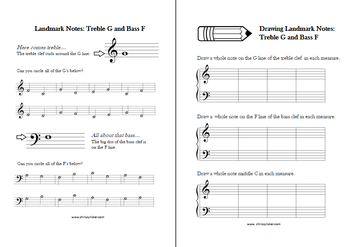
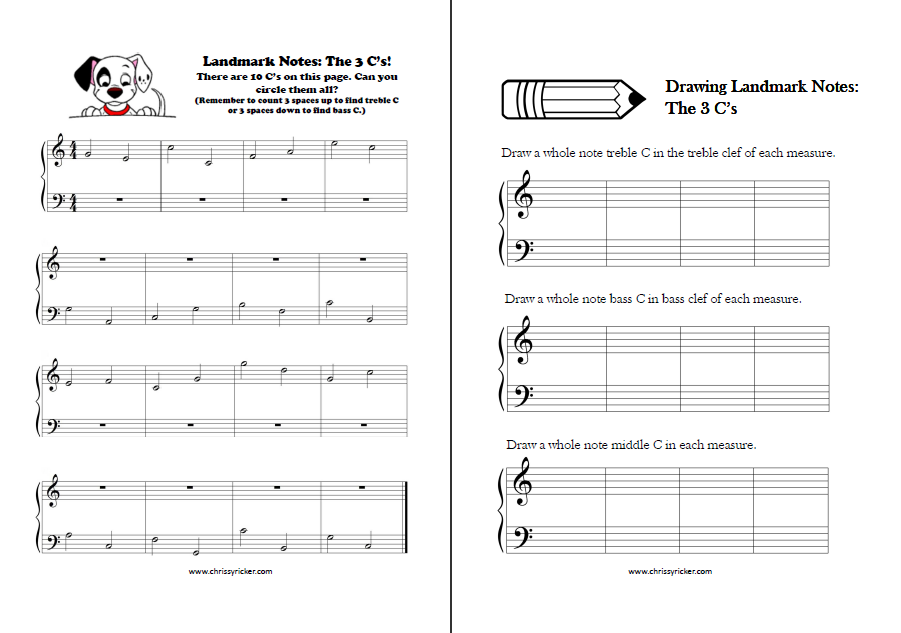
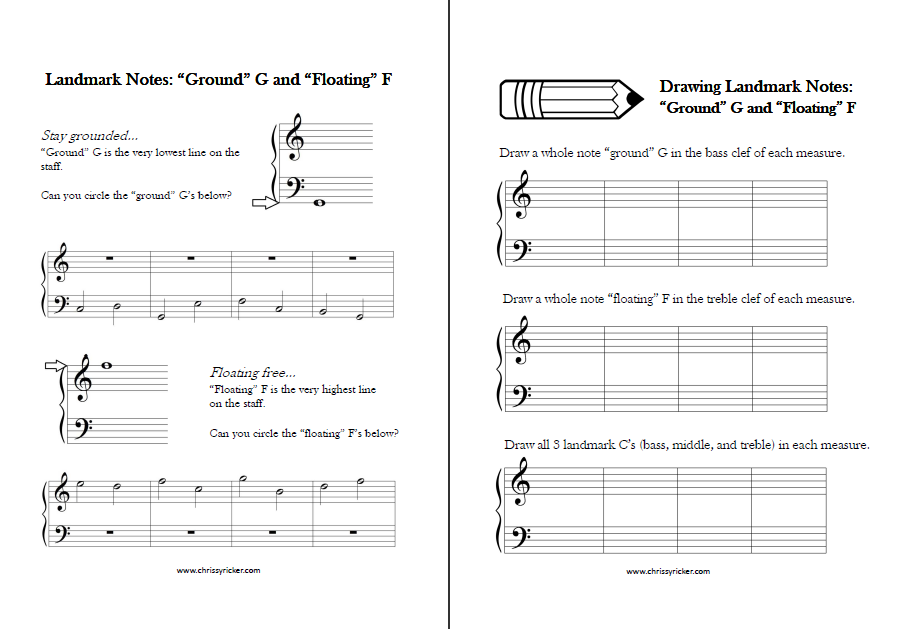
To help students practicing identifying and drawing these landmark notes, today I am sharing six free worksheets that you can use with your students! Each worksheet focuses on just 2-3 of the landmark notes pictured above. Click on the photos below to download each set of PDF worksheets. 
​

Picture


Worksheets 1 and 2:
Treble G, Bass F, and Middle C.

Students learn to use the treble and bass clefs to find these landmark notes quickly.


Picture


Worksheets 3 and 4:
​The 3 C's: treble, middle, and bass C.

Students learn to count 3 spaces up or 3 spaces down on the staff to find treble and bass C.


Picture


​Worksheets 5 and 6:
"Ground" G and "Floating" F, plus a review of drawing the 3 C's.


The terms "ground" G and "floating" F are great hints to help students remember the locations of these landmark notes.
What do you think? Do you teach note-reading using landmark notes? Please leave a comment if you find these worksheets to be helpful for your students--I would love to hear from you!

P.S. Don't forget to check out the other free worksheets and teaching resources on my "Free Stuff" page HERE.
20 Comments

A Free, Easy Ear Training Activity

1/13/2018

0 Comments

 
Picture
Is one of​ your New Year's resolutions to work on ear training with your students? 

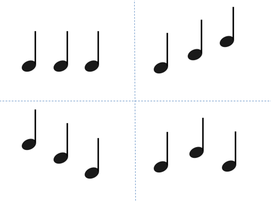
Getting started with ear training doesn't have to be difficult. Today I would like to share a fun, simple activity that you can do with your students as early as the very first lesson. This activity will help students learn how to listen for steps and skips as well as ascending and descending patterns on the piano. 

To use this activity, print out the instruction sheet and flashcards (found HERE). 
Start by showing students just the first two cards—same or up/different. Play one of the two patterns on the piano (I like to start by using the notes C, D, and E) and have them listen and identify which pattern they hear. Then, add the third card and ask students to identify whether the pattern they hear is "same, up, or down." 

Once a student is comfortable with "same, up, or down" patterns, g
radually add more cards and begin creating longer patterns by playing several cards in a row and asking students to put the cards in the correct order. The last two cards (using an “X” between the notes) introduce the concept of listening for skips. Practice singing and playing these cards separately before adding them to the mix. 

Once your students are comfortable with this activity, they are ready to do the ear training challenge worksheets using steps and skips found HERE, HERE, and HERE.

Download the "Same, Up, or Down" ear training activity HERE.

What do you think? Will you be doing ear training activities with your students this year?

0 Comments

Free Spooky Rhythm Activity Sheets!

9/30/2017

2 Comments

 
Picture

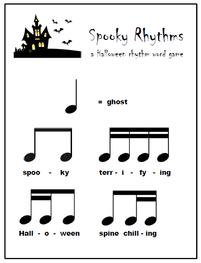
One of my favorite ways to work on rhythm with my students is to use rhythm words. Chanting words to rhythm notes is a good way to help students develop rhythmic fluency and learn to spot rhythmic patterns.

You've probably seen other examples of activities using rhythm words such as fruit, candy bars, or animals. With October almost here, I decided to create a rhythm activity for my students with a Halloween theme. This activity helps students to learn to recognize and count eighth note and sixteenth note patterns.

To use this activity, print out the rhythm chart and rhythm flashcards, making as many copies as you need to create multiple rhythmic patterns. Then try a few of the following ideas to practice these rhythms with your students:

1. Copycat rhythms: Clap a rhythm while saying the rhythm words from the chart, then have the student repeat. After a few repetitions, clap the rhythm without saying the words and have the student clap it back while saying the correct rhythm words.

2. Identify the rhythm: Clap a rhythm and have students use the rhythm cards to build the correct pattern.

3. Build a new rhythm: Give students a time signature and ask them to build one measure of their own rhythm using the cards, then clap it back.

4. Spot the mistake: create a rhythm using the rhythm cards and clap the rhythm with one beat clapped incorrectly. Ask students to spot the mistake and swap the rhythm card out for the correct one. 

Click HERE to download your free spooky rhythm chart and flashcards.
​
What do you think? How else might you use this spooky rhythm activity with your students? Please share in the comments!

2 Comments
<<Previous
Forward>>

    Author

    Chrissy Ricker is a pianist, teacher, and composer from North Carolina. These are her thoughts on teaching, composing, and all things music.


    Looking for teaching ideas related to a specific topic? Use the "search" feature or scroll down to see blog posts organized by category!

    Archives

    January 2026
    December 2025
    November 2025
    October 2025
    September 2025
    August 2025
    July 2025
    June 2025
    May 2025
    March 2025
    February 2025
    January 2025
    December 2024
    November 2024
    October 2024
    September 2024
    August 2024
    July 2024
    June 2024
    May 2024
    April 2024
    March 2024
    February 2024
    January 2024
    December 2023
    November 2023
    October 2023
    September 2023
    August 2023
    July 2023
    June 2023
    May 2023
    April 2023
    March 2023
    February 2023
    January 2023
    December 2022
    November 2022
    October 2022
    September 2022
    August 2022
    July 2022
    June 2022
    May 2022
    April 2022
    March 2022
    February 2022
    January 2022
    December 2021
    November 2021
    October 2021
    September 2021
    August 2021
    July 2021
    June 2021
    May 2021
    April 2021
    March 2021
    February 2021
    January 2021
    December 2020
    November 2020
    October 2020
    September 2020
    August 2020
    July 2020
    June 2020
    May 2020
    April 2020
    March 2020
    February 2020
    January 2020
    December 2019
    November 2019
    October 2019
    September 2019
    August 2019
    July 2019
    June 2019
    May 2019
    April 2019
    March 2019
    February 2019
    January 2019
    December 2018
    November 2018
    October 2018
    September 2018
    August 2018
    July 2018
    June 2018
    May 2018
    April 2018
    March 2018
    February 2018
    January 2018
    December 2017
    November 2017
    October 2017
    September 2017
    August 2017
    July 2017
    June 2017
    May 2017
    April 2017
    March 2017
    February 2017
    January 2017
    December 2016
    November 2016
    October 2016
    September 2016
    August 2016
    July 2016
    June 2016

    Categories

    All
    2 Minute Teaching Tips
    Active Listening
    Composer Focus
    Composition
    Duets
    Ear Training
    Easter
    Fall/Halloween
    Free Stuff
    Friday Funny
    Games
    Group Classes
    Holiday Music
    Lesson Planning
    Living Composers
    Memorization
    Music For One Hand
    Music History
    Musicianship Monthly
    NFMC Selections
    Online Lessons
    Patriotic Music
    Performing
    Pop Arrangements
    Practicing
    Professional Development
    Repertoire
    Rhythm
    Rote Teaching
    Saint Patrick's Day
    Sight Reading
    Sports Themed Resources
    Summer
    Summer Challenge Calendars
    Technique
    Technology
    Thanksgiving
    Theory
    Tips For Teens
    Transposition
    Travel Teaching
    Valentine's Day
    Wedding Music
    Young Beginners

    RSS Feed

    Subscribe to my monthly newsletter to stay informed about my latest publications and free teacher resources. Once you subscribe below, a fresh newsletter will be delivered to your inbox on the first of each month!

    *Your email will never be shared or used for any other purpose besides this once-monthly newsletter, and you may unsubscribe at any time by clicking "unsubscribe" at the bottom of your newsletter email. 

Subscribe
 © ​Copyright 2016-2025 Chrissy Ricker. All Rights Reserved.
Photos from hyekab25, Giancarlo - Foto 4U, geraldbrazell, djordjemiladinovich, Rosmarie Voegtli, barnimages.com, brownpau, magicatwork, wuestenigel